Struggling to determine the right amount of increase for your rental property? Our rent increase calculator simplifies this decision and helps you understand the math behind it. Designed for landlords and property managers, this real estate investor tool offers a hassle-free way to calculate rent increases, ensuring you stay competitive and profitable.
Calculate The Amount of a Rent Increase
Please input the required fields (*) below to calculate an apartment’s size.
Rent Increase Calculator

This calculator is meant for educational purposes only. The calculation generated from this calculator does not, and is not intended to, constitute financial advice. As such, all information, content, and materials available on this site are for general informational purposes only. Please review our Editorial Standards for more info.
Rent Increase Calculation Formulas
The formula for calculating a rent increase typically depends on various factors including local laws, market conditions, and the rental contract. However, 2 general formulas are often used to calculate rent increase:
Percentage Increase
Rent Increase = Current Rent1 * Percentage Increase 2
1. Current Rent – This is the amount the tenant is currently paying.
2. Percentage Increase – This is the percentage by which you want to increase the rent. This percentage can be influenced by market conditions, inflation rates, cost of living adjustments, or improvements made to the property. It’s important to ensure that this increase is in compliance with any local rent control laws.
Amount Increase
Rent Increase = (Current Rent1 – New Rental Amount2)
/ Current Rent1
1. Current Rent – This is the amount the tenant is currently paying.
2. Percentage Increase – This is the percentage by which you want to increase the rent. This percentage can be influenced by market conditions, inflation rates, cost of living adjustments, or improvements made to the property. It’s important to ensure that this increase is in compliance with any local rent control laws.
The #1 Rental Property Newsletter
Once a month, we send out an exclusive Rental Property Market Update with top stories, current mortgage rates, building products, and more. No spam and unsubscribe anytime.

What is a Rent Increase?
Rent Increase is an adjustment of rental charges by the landlord or property management, resulting in a higher rent payment amount required from the tenant. This adjustment is typically implemented at the renewal of a lease agreement or in accordance with the terms set forth in the original rental contract and relevant local laws.
Top 5 Free Rent Increase Notice Templates
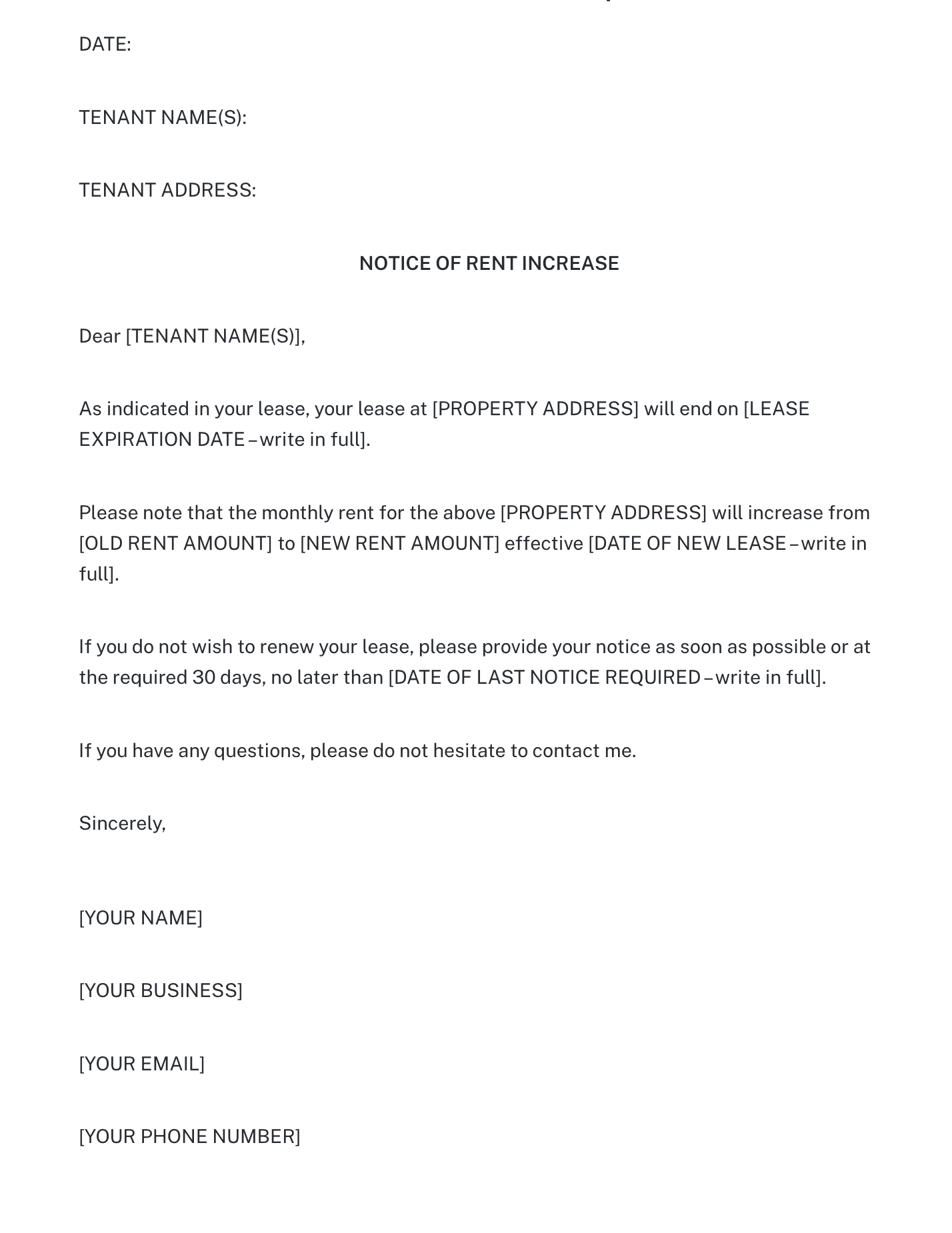
Rent increase notices are important written communications that landlords send to tenants when raising the monthly rent payment amount. We’ve reviewed all free rental property rent increase letters across the internet and selected the top 5 options.
Search Rental Real Estate
Try searching out site for hundreds of rental property topics ranging from property management, investor tool reviews, investment research, and more.
Rent Increase Calculator FAQ
Is There a Standard Rate or Cap For Rent Increases?
Rent prices vary by state, and the standard rate or cap for increases can vary significantly depending on local regulations and market conditions. In areas with rent control laws, there are specific caps on how much a landlord can increase rent within a certain period, often tied to inflation rates or a fixed percentage. In regions without rent control, landlords generally have more flexibility but must still consider market rates and tenant retention. The overall goal should be to have rents in the range of average rent prices of your local market.
What is the Difference Between a Rent Increase Calculator and Market Rate Analysis?
A rent increase calculator (like many of our other rental property calculators) is a tool that provides landlords with a suggested percentage or amount by which to increase rent, based on input data such as current rent, location, and market trends. In contrast, a market rate analysis is a more comprehensive evaluation, often conducted by real estate professionals, to determine the current rental value of a property in comparison to similar properties in the same area. While a rent increase calculator offers a quick estimate, a market rate analysis provides a detailed insight into the local rental market.