
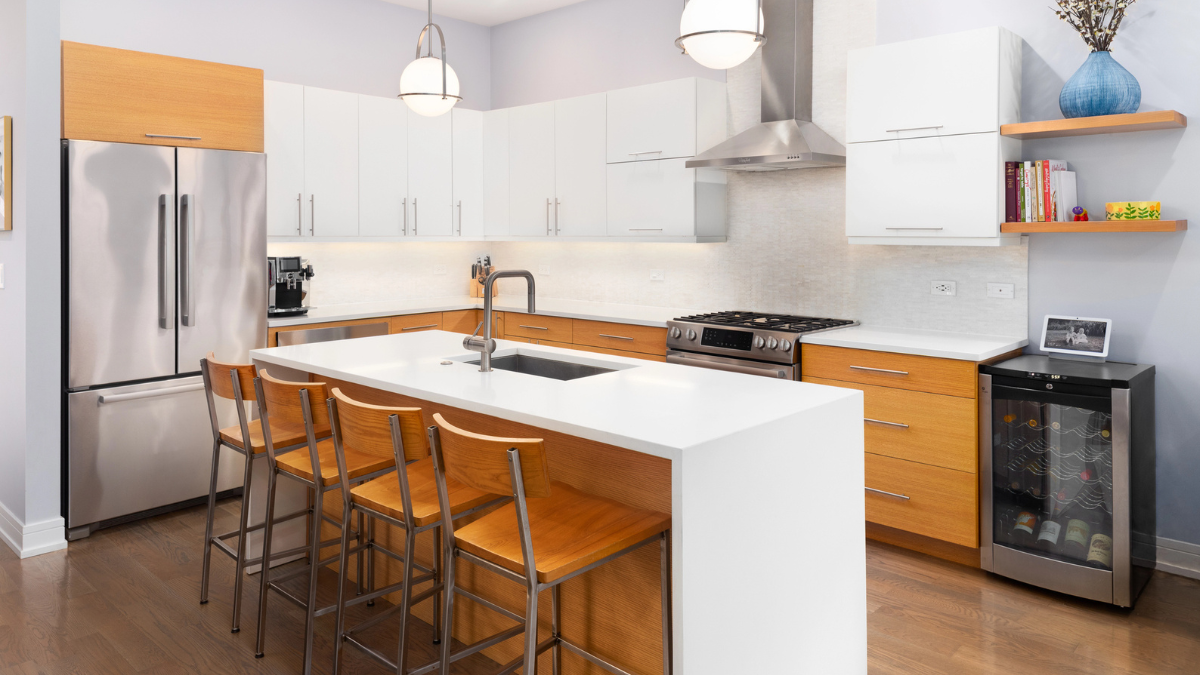
Landlords rarely renovate poorly because they chose the wrong room. More often, a rental property renovation falls short because it was optimized for one prospective tenant rather than the next five. The finish that wins attention during a Saturday walkthrough may not be the one that survives repeated move-outs, cleaning crews, and years of routine wear.
Every renovation decision therefore raises two questions at once: what supports tenant appeal now, and what continues delivering long-term value later? For an owner who already knows the property needs work, the real challenge is deciding where the money goes. The aim is to identify improvements that satisfy both tests while keeping return on investment (ROI) grounded in the property’s financial limits.
The Short Answer on Renovation Payback
The strongest payback usually comes from flooring, lighting, paint, cabinet and door hardware, and bathroom fixtures. Tenants see and touch these features daily, while durable options can withstand repeated cleaning and routine wear and tear.
Premium finishes selected mainly for listing photos often fail the test because comparable properties may not support the rent needed to recover their cost. Two filters settle most decisions: lifecycle cost per year of service and a market rent comparison against competing properties.
Renovation cost estimates should also account for vacancy and future replacement costs, not only the contractor’s price. Accordingly, improvements that reduce operating expenses or support tenant retention can outperform cosmetic work because they do not require a rent increase to earn their keep.
The overlap between attractive and durable upgrades is narrower than standard renovation checklists suggest. It is defined less by entire rooms than by the surfaces, controls, and fixtures that prospective tenants see or touch during a walkthrough.
Finishes Tenants Notice on the First Walkthrough
Kitchens and bathrooms influence first impressions, but neither necessarily needs a complete rebuild. Cabinet refacing, updated pulls, practical counters, and brighter task lighting can refresh a kitchen without the cost and disruption of a full kitchen remodel. Focused bathroom updates, including a new vanity, tapware, mirror, and shower fittings, work similarly.
The National Association of Realtors’ (NAR) Remodeling Impact Report examines remodeling projects through cost recovery and satisfaction, supporting a focus on lasting usefulness rather than visual novelty.
Flooring upgrades also deserve attention because every occupant uses them daily. Luxury vinyl plank (LVP) flooring photographs well while tolerating moisture, pets, and intensive turnover cleaning better than carpet. Likewise, curb appeal acts as an early leasing filter, so fencing, decking, and entry doors must make a good impression while surviving weather and repeated use.
Materials Built to Survive Several Tenancies
Material cost should be divided by expected years of service. A surface that lasts through several tenancies can cost less per year than a cheaper product that requires replacement after one difficult turnover.
Specifications matter as much as price. Commercial-grade LVP with replaceable planks is easier to repair than sheet flooring, while washable paint with a durable finish tolerates aggressive cleaning better than flat paint. Timber should also have the grade, treatment, and moisture condition appropriate to its location.
Some owners buy whatever the big-box store has in stock, others specify engineered board for moisture-prone rooms, and others take grade and moisture-content advice from the specialists at Beere Timber before ordering decking or door stock. In each case, materials must withstand realistic wear and tear, including wet cleaning, furniture movement, and localized repairs.
How to Size a Renovation Budget That Pays Back
No percentage rule outranks comparable listings because a submarket’s rent ceiling limits what an upgrade can recover. Renovation cost estimates must also include lost rent, making minimizing vacancy during upgrades part of the budget rather than an operational afterthought.
What the 30, 50, and 7 Percent Rules Govern
The 30% rule treats renovation spending as a share of property value. It functions as a ceiling on overall scope, not a target or evidence that the market will reward the work. A unit near its local rent ceiling could still be overimproved below that threshold.
The 50% rule applies to gross rental income. As an underwriting shortcut, it assumes operating expenses consume about half of gross rent before mortgage payments. It does not replace actual records, particularly when taxes, insurance, utilities, or management costs depart from that assumption. However, it shows why renovations that reduce recurring expenses can improve ROI without relying entirely on higher rent.
The 7% rule applies to gross rent reserved for maintenance and capital replacement. Setting aside that portion helps fund systems and components as they wear out. Because these rules use different bases, they should not be combined as though they answer the same budgeting question.
Repairs vs. Capital Improvements at Tax Time
Tax treatment changes a project’s effective cost. Work that maintains a rental in its existing condition generally counts as a repair and is deductible in the year paid. Work that adds value, adapts the property, or extends its useful life is generally capitalized. Residential rental improvements are commonly depreciated over 27.5 years.
Replacing one damaged cabinet door could therefore receive different treatment from installing an entirely new kitchen. That difference can make a targeted repair financially preferable even when full replacement looks more satisfying. Tax rules vary by facts and jurisdiction, so a CPA should confirm the treatment of a specific project.
Upgrades That Cut Costs and Keep Tenants Longer
A renewed lease can be worth more than a small rent increase. Turnover creates vacancy, marketing, cleaning, and make-ready costs, while tenant retention keeps the unit earning. Renovations that improve everyday comfort address that equation without depending on higher advertised rent.
Efficiency Work Tenants Feel in Their Bills
Insulation, air sealing, and suitable window upgrades can reduce energy loss, lowering a tenant’s total cost of occupancy even when the owner does not pay the utility bill. Stable indoor temperatures also make the benefit noticeable throughout the tenancy, not only during the first viewing.
Preventative work produces a different return. Servicing HVAC equipment, replacing deteriorated plumbing connectors, and controlling moisture can prevent disruptive calls and protect the maintenance reserve. Replacing a worn toilet valve during planned work, for instance, costs less and causes less disruption than responding after continuous running increases a water bill or causes a leak. These projects strengthen ROI through avoided expenses and fewer tenancy frustrations.
Timing the Work Around Turnover
Renovations that shut off water or power, create heavy dust, or block access to essential rooms belong between tenancies. Flooring, interior paint, bathroom fixtures, and kitchen work should be batched into a streamlined turnover process rather than scheduled as separate disruptions.
Exterior work, landscaping, common-area improvements, and routine mechanical servicing can proceed during an occupied tenancy with suitable notice and access arrangements. This division avoids unnecessary vacancy for work that does not require one.
Sequencing matters as well. Repairs and electrical work come before painting, while flooring follows dusty tasks but precedes final fixture checks and cleaning. One coordinated vacancy is easier to price than several interruptions, and each day saved protects the project’s return.
Renovating for the Second Tenant, Not Just the First
The right balance is not a compromise between tenant appeal and durability. It is the short list of improvements that satisfy both requirements while remaining within the submarket’s rent ceiling and the property’s available reserve.
A rental property renovation should still look leasable after routine wear, and it should continue earning through lower costs, reduced replacement work, or tenant retention. Scope follows those financial limits, not the ambition to make the unit look exceptional in one set of photographs.
The final test is simple: will the improvement still be earning, and still look attractive to tenants, for the tenant after next?
About the Author

Ryan Nelson
I’m an investor, real estate developer, and property manager with hands-on experience in all types of real estate from single family homes up to hundreds of thousands of square feet of commercial real estate. RentalRealEstate is my mission to create the ultimate real estate investor platform for expert resources, reviews and tools. Learn more about my story.