
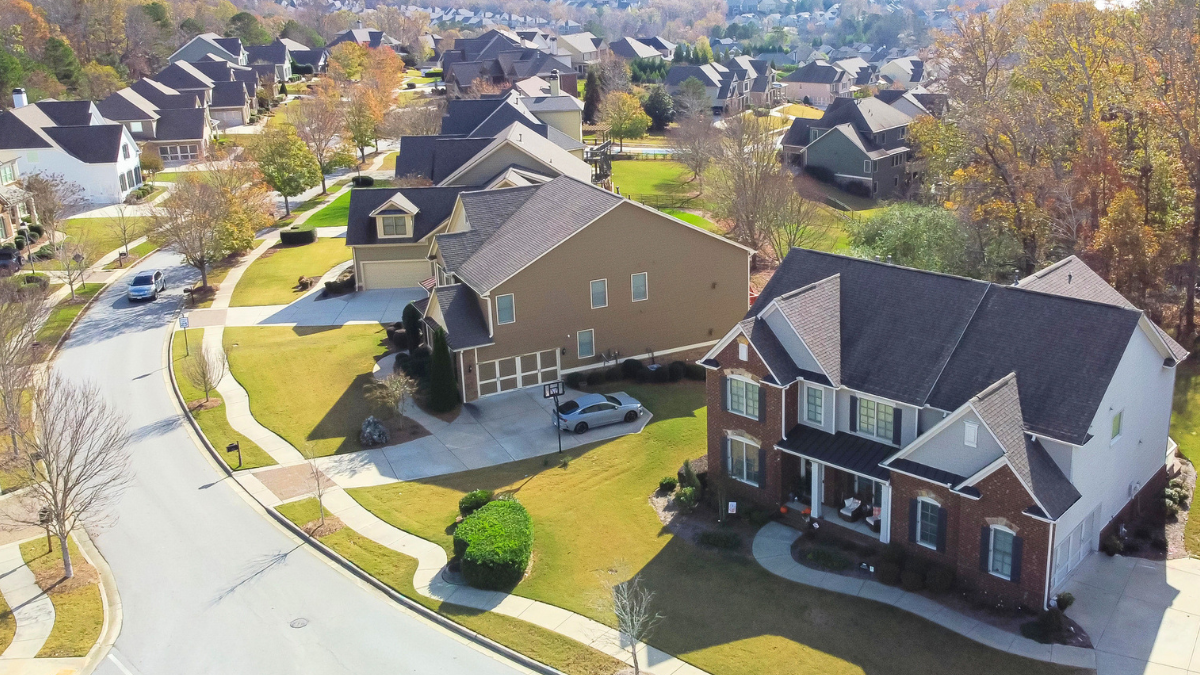
The Foundation for Community Association Research estimates that 373,000 community associations existed in the U.S. in 2025, housing about 78.1 million residents. Community associations represented 35.2% of U.S. housing.
In 2024, according to U. S. Census Bureau data, roughly 21.6 million U. S. households paid homeowners or condominium association fees. Approximately 3 million households had monthly payments in excess of $500.
These fees affect numerous individuals. Conflicts about HOAs and real estate are wide-ranging and can be from property boundaries to assessments. Restrictive covenants, maintenance responsibility, construction defects, and community rules are other sources of problems. These disagreements can jeopardize both an individual’s housing and finances. Addressing this issue may require the guidance of an experienced and knowledgeable HOA dispute lawyer. This legal professional may assist homeowners in understanding the next steps to take in their case.
The scale of HOA living makes these conflicts increasingly relevant. Let’s look at the legal options available for resolving HOA and real estate disputes and the issues that commonly lead to conflict.
The Documents Decide More Than the Argument Does
Most of the fights that community associations have against their members relate to paper that existed before the current owner bought the property. The association’s recorded declaration of covenants, conditions, and restrictions goes with the title of the land and is binding upon the title holder even if he/she has not read it. Next in the pecking order are the by-laws, the architectural guidelines, the house rules the board passed, and the annual operating budget.
Owners argue fairness while boards argue documents. The text in documents usually wins, which is why the first useful move in the event of an HOA or real estate dispute is assembling the complete governing document set. The property owner must check whether the rule being enforced actually appears in the document. Next, the owner must verify whether the board followed its adoption procedure. It is also the responsibility of the owner to see if similar enforcement policies were applied to neighbors.
Which Side of the Table Your Lawyer Sits On
Attorneys practicing in community association law typically represent one side of the relationship consistently. A substantial portion of the lawyers in this field maintain ongoing retainer relationships with homeowners associations and the management companies that administer them. A smaller group of practitioners represents individual owners in disputes against those same associations. These represent distinct areas of practice that seldom overlap, since a firm retained by associations on an ongoing basis is not well positioned to bring suit against one.
That split is worth checking before hiring anybody. Harper Hall PLC, a Gilbert firm whose practice runs through association law, easements, foreclosure, and neighbor disputes, states outright on its site that it does not represent homeowners associations and instead represents owners in disputes with them. An Arizona real estate lawyer there handles that work alongside residential and commercial transaction matters.
Paper Beats Argument
It may be challenging for real estate owners to deal with disputes when the papers they have are lacking. Significant correspondence may come in the form of board meeting minutes, architectural plans, and corrections in relation to alterations and violation notices where applicable.
Additional relevant documents could encompass complaints and issues regarding maintenance services, state reports, or images reflecting the current state of the building. It may be necessary to provide information regarding similar structures in neighboring areas, especially if such information shows that the HOA treats these properties differently.
Arizona Routes These Disputes to an Administrative Judge
Arizona built a path most states do not have. An owner or an association can petition the Arizona Department of Real Estate over an alleged violation of the community documents. The state also has statutes governing violations concerning condominiums and planned communities. The department forwards qualifying petitions to the Office of Administrative Hearings, where an administrative law judge decides the matter. Nobody is required to hire a lawyer to use it.
The department is clear about what it does not do. Its consumer page says it does not regulate homeowners associations, does not investigate them, and cannot advise anyone on what an association may or may not do. Jurisdiction also stops at the association’s door, so an owner-versus-owner quarrel the association is not party to belongs somewhere else.
A filing fee applies, set by the commissioner, and it comes back only in narrow circumstances, including a settlement the parties reach before a hearing gets scheduled.
California Makes You Try Resolution First
California follows a similar approach but uses a different procedural process. Under Civil Code section 5930, an association or a member cannot file an enforcement action in superior court unless the parties have endeavored to submit the dispute to alternative dispute resolution first. A Request for Resolution opens that process under section 5935, and the party receiving one has 30 days to answer before the request counts as rejected.
The fee provision changes the calculation more than the resolution requirement does. Civil Code section 5975(c) provides that in an action to enforce the governing documents, the prevailing party shall be awarded reasonable attorney’s fees and costs. That runs both directions.
An owner who wins can recover costs. An owner who loses may have to pay the association’s bill, which is why a marginal case in California deserves careful assessment before filing.
Not Every Property Fight Is an Association Fight
Many real estate disputes have nothing to do with a board. Examples include sellers who kept quiet about what they knew about the roof or the foundation and title defects that surface months after closing. Easements that let a neighbor cross land the owner assumed was private or that the owner assumed existed but does not are other problematic scenarios. Boundary and encroachment fights over a fence sitting three feet inside the wrong lot. Contract disputes when financing collapses or a closing date slips.
Those follow different rules and different clocks than a covenant fight, and the available remedies differ too. Working out which category a problem actually belongs to is usually the first real decision anyone makes.
Most of these disputes can be solved early by obtaining the governing documents and putting every request and complaint in writing. Photograph the condition, and photograph what the neighbors got away with. By the time anyone files anything, the record either exists or it does not.
About the Author

Ryan Nelson
I’m an investor, real estate developer, and property manager with hands-on experience in all types of real estate from single family homes up to hundreds of thousands of square feet of commercial real estate. RentalRealEstate is my mission to create the ultimate real estate investor platform for expert resources, reviews and tools. Learn more about my story.