
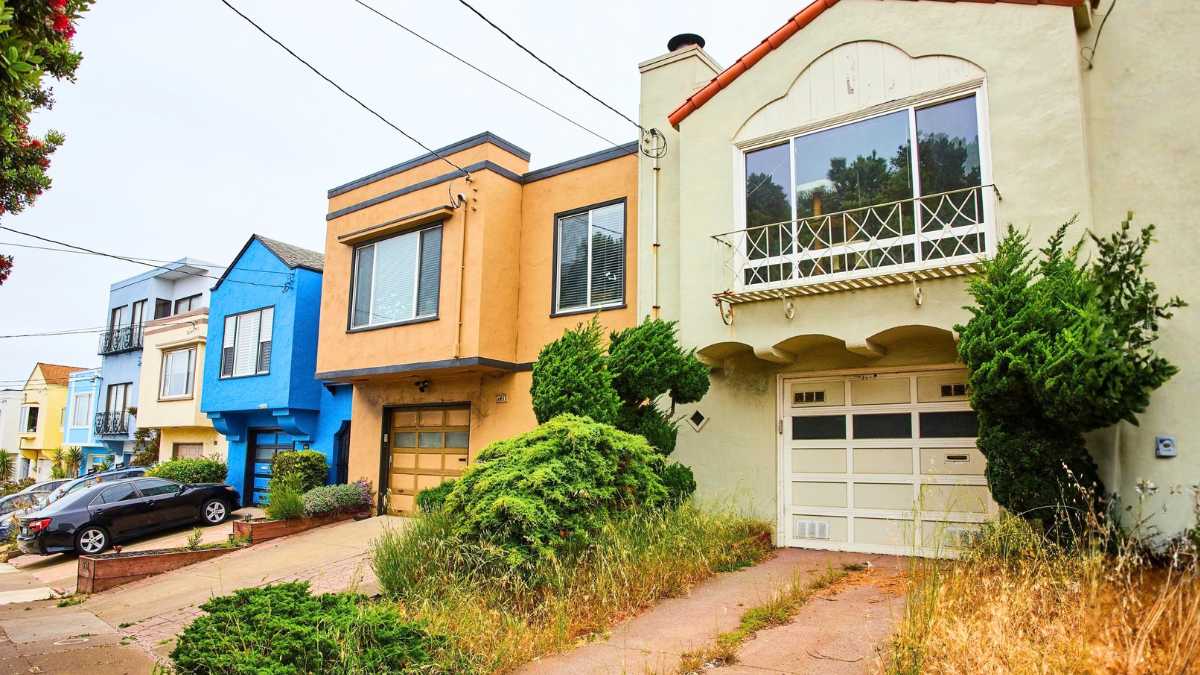
An inherited house with a leaking roof, dated kitchen, or years of deferred maintenance can look like an opportunity and a headache at the same time.
Should you put money into repairs and keep the property as a rental? Fix it enough to sell? Or skip the renovation altogether and sell it as-is?
There isn’t one answer that works for every property. For small landlords, heirs, accidental landlords, and individual investors, this is really a capital-allocation decision. Every dollar spent renovating the property is a dollar that can’t be invested somewhere else. Every month spent repairing or marketing it carries a cost. And keeping it as a rental means accepting vacancy, maintenance, taxes, financing costs, and management responsibilities in exchange for future income and appreciation.
The best way to approach the decision is to compare three paths using the same set of assumptions: repair and rent, repair and sell, or sell as-is. Here’s how to work through the numbers.
1. Start With the Property, Not the Exit Strategy
It’s easy to decide that you want another rental before figuring out whether the property actually works as one. Start by assessing the building itself. Look beyond cosmetic items such as paint and flooring. Pay particular attention to expensive systems that can change the economics of the investment:
- Roof condition and remaining life
- HVAC age and condition
- Plumbing and electrical systems
- Foundation or structural problems
- Water or mold damage
- Windows and exterior siding
- Appliances
- Local code violations
- Safety issues
- Landscaping or drainage problems
An inherited property may also have maintenance issues that aren’t immediately visible. A professional inspection can help identify them before you commit tens of thousands of dollars to a renovation plan.
Distressed properties deserve even more caution. ATTOM reported that 367,460 U.S. properties had foreclosure filings in 2025, up 14% from 2024. Lenders also completed 46,439 repossessions, a 27% annual increase. That doesn’t mean every distressed property has major physical problems. It does mean investors buying through foreclosure-related channels shouldn’t assume the visible repairs represent the full budget.
Before choosing an exit strategy, answer a simpler question: What would it cost to make this property safe, functional, rentable, or marketable?
2. Build a Repair Budget With Different Levels of Work
Once you understand the property’s condition, separate repairs into categories instead of creating one giant renovation number.
Repairs needed no matter what
Some work may be required whether you rent or sell. A failed water heater, active plumbing leak, unsafe wiring, or broken HVAC system can’t always be postponed. Calculate those costs first.
Repairs needed primarily for renting
A rental may need durable flooring, working appliances, locks, smoke detectors, basic cosmetic improvements, and other work needed to attract tenants and meet local requirements. You don’t necessarily need to renovate the property to the standard of a newly remodeled owner-occupied home.
Repairs intended to raise the sale price
Some projects may make the property easier to sell or increase its value, but that doesn’t mean they’ll return every dollar you spend.
The 2025 Remodeling Impact Report from the National Association of REALTORS® and National Association of the Remodeling Industry estimated that a new steel front door could recover 100% of its project cost at resale. A closet renovation had an estimated 83% cost recovery, while a fiberglass front door came in at 80%.
Agents surveyed for the same report were also more likely to recommend relatively straightforward work before selling: 50% recommended painting the entire home, compared with 37% who recommended installing a new roof. The takeaway is simple: don’t assume a $40,000 renovation produces a $40,000 increase in your sale proceeds.
For rental properties, repair spending varies widely too. The 2024 Rental Housing Finance Survey from the U.S. Census Bureau and HUD found a median total capital-improvement value of $900 per rental property, but a mean of $7,540. On a per-unit basis, the median was $650 and the mean was $4,952.
That wide gap is a reminder that a relatively small number of expensive projects can push average spending much higher. And construction costs remain elevated. According to Harvard’s America’s Rental Housing 2026, residential construction material input costs rose 42% from January 2020 through December 2025, while labor costs increased 24.1%. Get current contractor estimates rather than relying on what a similar renovation cost several years ago.
3. Calculate the Rental Economics
Suppose the property can be repaired for $35,000. Keeping it might sound appealing if comparable homes rent for $2,200 per month. But $2,200 multiplied by 12 isn’t your annual profit. Start with achievable rent and subtract the costs required to operate the property. A basic rental calculation might look like this:
Gross scheduled rent
$2,200 × 12 = $26,400
Then subtract:
- Expected vacancy
- Property taxes
- Insurance
- Maintenance
- Capital expenditure reserves
- Property management
- HOA fees, if applicable
- Utilities paid by the owner
- Leasing or tenant-placement costs
- Financing expenses
If you expect 5% vacancy, for example, $26,400 of scheduled rent becomes about $25,080 before any other expenses.
And vacancy deserves attention in today’s rental market. Harvard reported that the vacancy rate for professionally managed apartments reached 5.2% in the fourth quarter of 2025, compared with a 4.9% average from 2015 through 2019. Asking rents for professionally managed apartments also declined 0.6% year over year during the quarter.
Those are national apartment figures, not a forecast for your single-family rental. Your local market may perform very differently. They do, however, show why assuming uninterrupted rent growth and zero vacancy can make an investment look better on paper than it really is.
Calculate return on the capital you must invest now
An inherited home creates an interesting accounting problem because you may own it without having paid today’s market value for it. That doesn’t make the property free.
Suppose you inherited a home worth $280,000 as-is and need to spend $35,000 to make it rentable. You effectively have $315,000 of capital tied to that decision, even if your original cash purchase price was zero. Compare the rental income against the value of the property and the new money you have to invest. Ask:
If I had $315,000 available today, would I choose to buy this exact rental at these numbers?
That’s often a better question than asking whether you should keep a house simply because you already own it.
4. Calculate the Sale Economics
Next, run two separate sale scenarios:
- Repair and sell
- Sell as-is
Don’t compare listing prices. Compare estimated net proceeds. For a repaired sale, your calculation might be:
Expected sale price
minus renovation costs
minus holding costs during renovation
minus selling expenses
minus seller concessions
minus taxes or other transaction costs
= estimated net proceeds
Then run the same calculation for an as-is sale. A property worth $300,000 after renovation isn’t necessarily more profitable than an as-is offer of $255,000 if reaching $300,000 requires $30,000 of improvements and four months of carrying expenses.
Account for today’s negotiating environment
Selling a property that needs work can be more complicated when buyers have plenty of choices. According to Redfin, sellers provided concessions in 44.7% of U.S. home sales during the three months ending August 31, 2026, up from 42.6% a year earlier. Concessions can include money toward repairs, closing costs, or mortgage-rate buydowns.
Properties with visible deferred maintenance may give buyers even more reasons to negotiate. If you’re considering selling as-is in Gwinnett County, for example, the calculation should account for both the money saved by skipping repairs and the discount a buyer may expect for taking on that work.
Your local results may differ significantly from national figures, so recent comparable sales matter more than broad averages.
Don’t confuse gross profit with cash you’ll actually receive
Homeowners can also be tempted by headlines about seller profits. ATTOM reported that approximately 3.9 million U.S. homes sold in 2025 at a national median price of $360,000. The typical sale generated $118,710 in gross profit, representing a 49% return on the previous purchase price.
That was down from $124,500 and a 55% margin in 2024. Gross profit isn’t the same as net proceeds after repairs, financing, transaction expenses, taxes, and years of ownership costs. For an inherited or distressed property, your own property-level calculation is far more useful.
5. Put a Price on Time and Opportunity Cost
Opportunity cost is easy to overlook because it doesn’t appear as an invoice. Suppose selling the property today would leave you with $250,000 after transaction expenses. Keeping it means you continue tying that equity to one property. What else could that $250,000 do? You might use it to:
- Pay down higher-cost debt
- Buy another rental with stronger cash flow
- Diversify into other investments
- Build cash reserves
- Finance improvements on existing properties
- Make a larger down payment on another acquisition
Now consider the repair money too. If keeping the property requires another $40,000, you’re choosing to put $290,000 of available capital into that asset. The question isn’t merely, “Will this rental make money?” It’s:
Does keeping this property offer an attractive return compared with the other uses available for the same capital?
Time belongs in the equation as well. A six-month renovation with loan payments, taxes, insurance, utilities, lawn care, and no rental income may materially change your return.
6. Compare the Three Scenarios Side by Side
Once you’ve gathered the numbers, put each option into a simple comparison.
Scenario A: Repair and rent
This may make sense when:
- Renovation costs are manageable.
- Local rents support healthy cash flow after expenses.
- Vacancy is relatively low.
- The property doesn’t require constant hands-on management.
- You have enough reserves for future repairs.
- Expected long-term returns compare favorably with selling and reinvesting the equity.
Scenario B: Repair and sell
This may be worth considering when:
- A targeted renovation could materially improve marketability.
- Recent comparable sales support a higher post-renovation price.
- The expected price increase comfortably exceeds repair and carrying costs.
- You can manage contractor and schedule risk.
- Buyers in the local market place a meaningful premium on move-in-ready homes.
Be cautious about renovating simply because updated homes sell for more. The difference between the as-is value and renovated value must be large enough to compensate for the money, time, and risk involved.
Scenario C: Sell as-is
Selling without major repairs may be the stronger option when:
- The property needs expensive structural or mechanical work.
- You don’t want to contribute more capital.
- Carrying costs are accumulating quickly.
- The property is vacant.
- Managing contractors isn’t practical.
- Rental cash flow would be weak after expenses.
- Another investment offers a better use of the equity.
An as-is sale doesn’t automatically mean accepting the first low offer. Investors can still compare multiple offers and calculate net proceeds under each one.
7. Stress-Test the Decision Before Committing
Your first spreadsheet will probably be too optimistic. Run a second version where things don’t go perfectly. What happens if:
- Repairs cost 15% more than expected?
- Renovation takes two extra months?
- Rent comes in $150 below your estimate?
- The property sits vacant for six weeks?
- A major system fails during the first year?
- The final sale price comes in 5% lower?
- The buyer requests closing-cost assistance?
- Financing costs stay higher than expected?
If the investment only works when every assumption goes right, the margin for error may be too thin. On the other hand, if the property still produces acceptable results after conservative assumptions, keeping it may deserve serious consideration.
Make the Property Compete for Your Capital
Inherited and distressed properties can create an emotional bias that ordinary investment purchases don’t. An heir may feel attached to a family home. An investor who already spent money acquiring a distressed property may feel committed to finishing the project. An accidental landlord may keep renting because selling seems complicated. Try to separate those feelings from the financial decision.
First, assess the property and identify the work it actually needs. Then obtain realistic repair estimates. Calculate rental income after vacancy, maintenance, management, taxes, insurance, financing, and reserves. Estimate sale proceeds under both renovated and as-is scenarios. Finally, compare those outcomes with what you could earn by putting the same money somewhere else.
The answer might be repair and rent. It might be renovate and sell. Or it might be taking an as-is offer and redeploying the capital. None of those choices is automatically better.
Treat the property as though it were competing for your money today. If you’d willingly invest your available equity and repair budget into that property based on its expected return, holding it may make sense. If you wouldn’t buy it at today’s value with today’s numbers, selling deserves a closer look.
About the Author

Ryan Nelson
I’m an investor, real estate developer, and property manager with hands-on experience in all types of real estate from single family homes up to hundreds of thousands of square feet of commercial real estate. RentalRealEstate is my mission to create the ultimate real estate investor platform for expert resources, reviews and tools. Learn more about my story.