
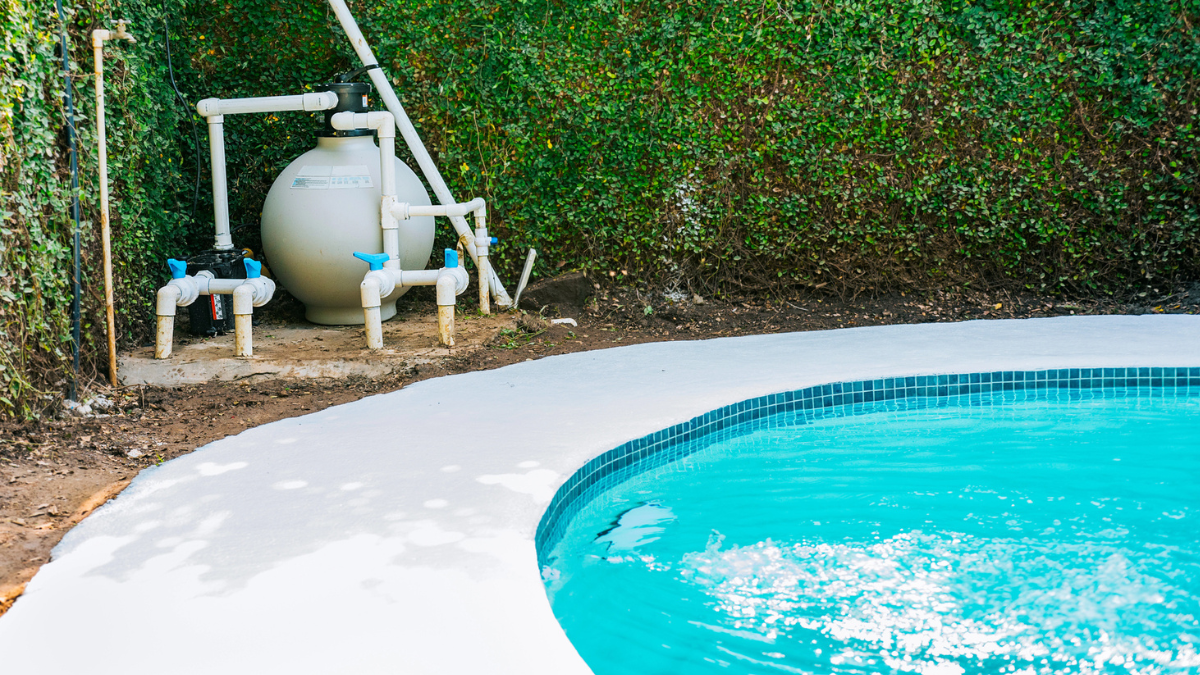
A pool can be one of the most appealing features of a rental property, but only when the water is clean and the equipment works as expected. When something starts going wrong behind the scenes, that attractive amenity can quickly become another maintenance request waiting for attention.
The filter plays a particularly important role. It continuously removes suspended debris as water moves through the circulation system, helping the pool stay clear and usable. When filtration starts falling behind, the first signs can seem minor—cloudy water, unusual pressure readings, or weaker circulation—but they can point to a problem that deserves attention before it begins affecting other equipment or the tenant experience.
The Filter Does More Than Keep the Water Looking Clear
It is easy to think of a pool filter as something that simply catches leaves and visible debris. Most of the larger material should actually be handled by baskets and routine cleaning before it ever reaches the filter.
The filter’s job is to capture much smaller suspended particles as water circulates through the system. That makes filtration part of a larger process. The pump moves water, the filter removes particles, and properly maintained water chemistry handles sanitation and balance. If one part is struggling, the others may not perform as effectively.
For a rental property, consistency matters. Tenants generally do not care which component caused the problem. They notice that the pool looks cloudy, circulation seems weak, or an amenity they expected to use is temporarily unavailable.
Know When Cleaning Isn’t Solving the Problem
Routine filter maintenance is part of pool ownership, but repeated problems after cleaning deserve a closer look. A cartridge can become damaged. Internal components can fail. Valves, seals, gauges, or filter housings may develop problems. Circulation issues elsewhere in the system can also create symptoms that appear to originate at the filter.
If cloudy water, unusual pressure, leakage, or reduced circulation keeps returning, a pool filter repair company can inspect the filtration and circulation system to determine whether the filter needs repair or whether another component is contributing to the problem.
Accurate diagnosis matters because replacing parts based on guesswork can quickly increase maintenance costs without resolving the original issue.
Cloudy Water Can Be an Early Warning Sign
Cloudy water has several possible causes, so a dirty filter should not automatically receive all the blame. Water chemistry, circulation, environmental debris, and filtration can all contribute. The useful question is whether several symptoms are appearing together.
If the water remains cloudy despite appropriate chemical balance, for example, take a closer look at circulation and filtration. Weak return flow or an unusual filter-pressure reading can provide additional clues.
Understanding the basic relationship between circulation, filtration, and routine pool care can make it easier to recognize when poor water clarity may involve more than chemistry alone. For a rental owner, early investigation is usually preferable to repeatedly adding chemicals without determining why the water is not clearing.
Pay Attention to Changes in Filter Pressure
The pressure gauge is one of the simplest ways to keep an eye on filter performance. There is no single pressure reading that is correct for every pool. Equipment, plumbing, pump speed, and system design can all influence the normal number. What matters more is establishing the system’s usual clean-filter pressure and noticing when it changes significantly.
A rising reading can indicate increasing resistance as the filter collects debris. An unusually low reading may point toward a circulation problem elsewhere in the system. Neither reading should be interpreted in isolation, but both can provide useful information when combined with changes in water flow or clarity.
Equipment manufacturer instructions should guide cleaning and maintenance intervals because different filter types have different requirements.
A Filter Problem Can Put Pressure on the Rest of the System
Pool equipment works as a connected system, which means one problem can influence another component. When water cannot move through the filtration system properly, circulation may decline. That can affect how efficiently the pool is filtered and may change how the pump operates.
This is where delaying maintenance can become expensive. What begins as a filter that needs cleaning could eventually become a larger service issue if there is an underlying blockage, damaged component, valve problem, or circulation fault.
Rental owners should be particularly careful about temporary fixes that hide symptoms without identifying their cause. Getting the water clear for a tenant is useful, but understanding why it became cloudy in the first place is what helps prevent the same complaint from returning.
Tenants Notice the Water Before They Notice the Equipment
Most tenants will never inspect a filter tank or study the pressure gauge. They will notice the pool. Cloudiness, visible debris, poor circulation, or recurring closures can quickly change how residents perceive an otherwise attractive amenity. If access to the pool influenced their decision to rent the property, repeated problems can become particularly frustrating.
This makes tenant communication useful for more than customer service. Encourage residents to report noticeable changes rather than attempting to troubleshoot equipment themselves. A tenant mentioning that the water suddenly looks different or that the return jets feel unusually weak may provide an early warning before the system develops a more obvious problem.
For properties with frequent guest turnover, consistent pool condition becomes even more important because each new arrival forms an impression almost immediately.
Different Filters Need Different Kinds of Attention
Not every rental property uses the same filtration equipment. Cartridge, sand, and diatomaceous earth filters work differently and have their own maintenance requirements. Treating them as interchangeable can lead to unnecessary work or improper servicing.
For example, cartridge filters require periodic removal and cleaning, while other filter types use different cleaning procedures. Maintenance frequency also depends on factors such as pool use, debris levels, equipment size, and water conditions. A useful approach is to keep the manufacturer’s instructions available with the property’s pool-service records.
You can also learn the basic differences between common pool filter types before deciding how a particular system should be maintained or when replacement may make sense. Knowing what equipment is installed makes conversations with maintenance professionals considerably easier too.
Maintenance Records Can Save Rental Owners Time
Pool maintenance becomes much easier to manage when you can see what has already been done. Keep a basic history of filter cleanings, repairs, pressure readings, equipment replacements, and recurring water-quality problems. The records do not need to be complicated.
Over time, they can reveal patterns that are easy to miss when each maintenance request is handled separately. If a filter requires attention much more frequently than expected, for example, the issue may involve equipment sizing, unusually heavy debris, circulation problems, or another condition worth investigating.
Records are particularly valuable when several contractors or property managers are involved. The next person servicing the pool can understand its recent history instead of starting from zero.
Preventive Care Doesn’t Need to Feel Like a Checklist
Staying ahead of filter problems is mostly about knowing what normal looks like. Notice the usual pressure after the filter has been serviced. Pay attention to the strength of the return flow. Look at the water regularly instead of waiting for a tenant to complain. Check around the equipment for leaks or other visible changes.
When something begins behaving differently, investigate why. That simple habit is often more useful than reacting only after the water becomes visibly unpleasant or equipment stops working.
Regular servicing can also be coordinated with other rental-property maintenance, making the pool part of the property’s normal care rather than something addressed only when it causes trouble.
Protect the Amenity You’re Offering
A rental pool should add value to the property, not create a cycle of complaints and emergency maintenance. Keeping the filtration system in good condition supports clear water, dependable circulation, and a better experience for the people using the pool. It can also help you identify equipment problems while they are still manageable.
You do not need to become a pool technician to stay ahead of these issues. Know how the system normally performs, take recurring changes seriously, keep useful maintenance records, and bring in qualified help when routine servicing no longer solves the problem. A pool is much easier to market as an amenity when it consistently looks and works like one.
About the Author

Ryan Nelson
I’m an investor, real estate developer, and property manager with hands-on experience in all types of real estate from single family homes up to hundreds of thousands of square feet of commercial real estate. RentalRealEstate is my mission to create the ultimate real estate investor platform for expert resources, reviews and tools. Learn more about my story.