
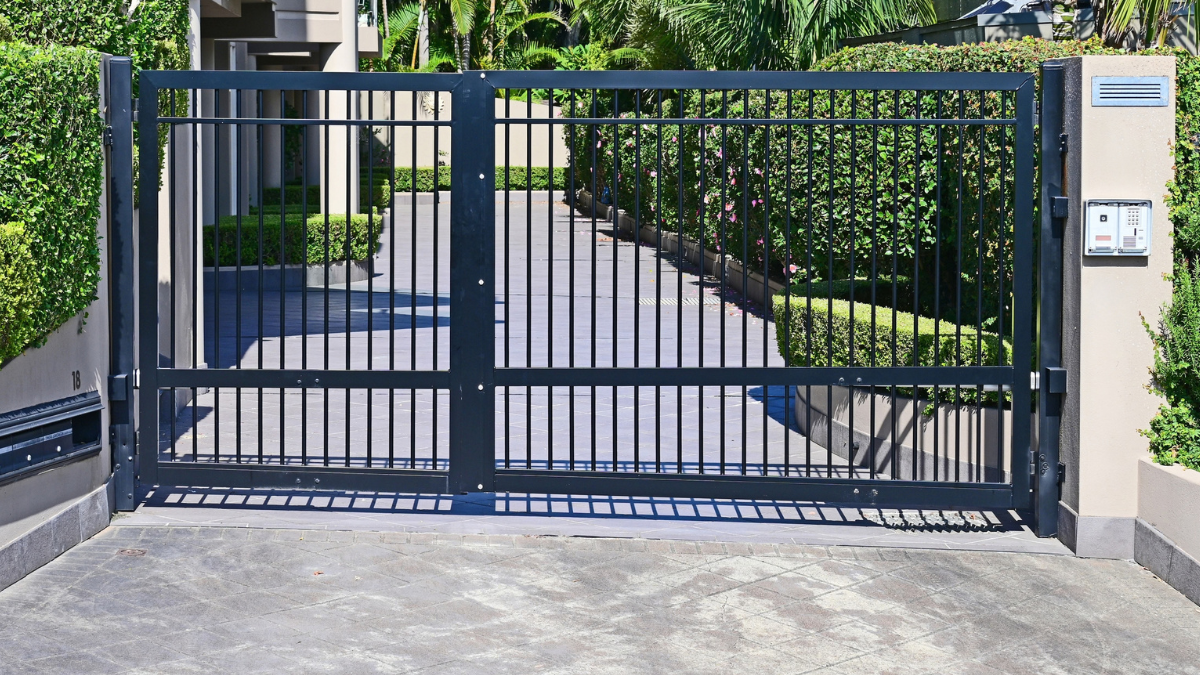
Rental properties see more foot traffic than most owner-occupied homes. Tenants move in and out, contractors arrive for repairs, and delivery drivers stop by several times a day. Each visit creates a chance for someone to walk onto the property without permission. For landlords, controlling that access is one of the hardest parts of the job. An automated gate gives owners a practical way to decide who enters and when. It also creates an access record that keys and padlocks can’t provide.
A gate only solves these problems while it works. A failed motor or a stuck sensor can leave the gate open for days, and an open gate offers no protection at all. Tenants also start propping gates open once they stop trusting them. Scheduling prompt automatic gate repair keeps the perimeter closed and shows tenants that the owner takes their safety seriously.
Why Rental Properties Face Unique Security Risks
Turnover sits at the center of the problem. A family home might keep the same owner for a decade, while a rental unit can change hands every year or two. Former tenants may still hold copies of their keys. Shared parking lots and courtyards at multifamily buildings give strangers an easy place to blend in. Many landlords also manage their properties from a distance, so problems can go unnoticed for days. Short-term rentals add another layer, with new guests arriving every few days.
Individual Access Credentials Replace the Lost-Key Problem
Traditional keys are hard to control. Anyone can copy them, and landlords rarely know how many copies exist. Automated gates work with keypad codes, key fobs, access cards, or smartphone apps. Each tenant can receive a unique credential tied to their unit.
That changes move-out day. The landlord can delete a departing tenant’s code or deactivate their fob in a few minutes. Nobody has to rekey locks or chase down every copy of a key. For owners with several units, this kind of control fits into a broader property management routine, where access updates happen alongside lease renewals and move-in inspections.
Unique credentials also discourage casual sharing. When tenants know their code is linked to their name, they’re less likely to hand it out to friends or former roommates. Credentials can also follow a schedule. A tenant’s code can stay active around the clock, while a dog walker’s code works only during set hours. Owners can review and adjust these settings remotely without visiting the property.
A Visible Barrier Deters Opportunistic Crime
A large share of property crime is opportunistic. A thief walks through an open parking lot and tries car doors until one opens. A gate removes that easy path in. Even a gate that a determined person could climb sends a clear signal that the property is private and monitored.
Security planners have recognized this effect for decades. A design-based approach to crime prevention, known as CPTED, treats access control as a core principle. It pairs that principle with natural surveillance and territoriality.
For rental owners, a gate turns that principle into daily practice. It marks a firm boundary between the public street and tenant space. It also makes anyone lingering inside the property easier to notice. Good lighting and clear sightlines near the entrance strengthen the effect, since tenants can see who is waiting at the gate.
Better Control Over Visitors and Deliveries
Tenants still need guests and service providers to reach them. Modern gate systems handle this with call boxes and video intercoms. A visitor presses a button at the entrance. The tenant sees or hears them and opens the gate from a phone.
Landlords can also issue temporary codes. A plumber might get a code that works only on the day of the repair. A cleaning crew might get one that works on weekday mornings. Once the job ends, the code expires automatically.
Remote control also helps landlords who live far from their properties. An owner in another city can let in an HVAC technician and confirm the visit through the intercom camera. The gate then closes behind the technician on its own timer.
Package theft is a common complaint at rental properties. When delivery drivers leave parcels inside a controlled area or at a secure drop point near the gate, passersby can no longer reach them.
Entry Logs and Camera Integration
Many automated gate systems record every entry. Each log shows which credential opened the gate and when. When a car is damaged, or a unit is burglarized, those records help narrow down who was on the property. Some systems also send alerts when the gate stays open too long or when a code fails several times in a row.
Logs become even more useful when paired with cameras at the entrance. A camera can capture license plates and faces, while the access log confirms which code was used. Together, they give landlords solid evidence during tenant disputes and give police a clear starting point.
This documentation also helps after a loss. Clear records of when an incident happened and who had access can support a claim under a landlord insurance policy. They also show that the owner took reasonable security steps before the incident occurred.
Safety Standards and Landlord Liability
A security upgrade should never introduce a new hazard. Automated gates are heavy, and a gate that closes on a person or a vehicle can cause serious harm. Children who play near moving gates face the greatest risk.
Modern gate operators include entrapment protection. Photo eyes and sensing edges detect an obstruction, and the operator then stops or reverses the gate. Reputable operators sold in the United States are listed to UL 325, the main safety standard for gate operators. Older installations may predate the current requirements and lack these features.
This matters to landlords because they’re generally responsible for the safety of common areas. A gate with broken sensors or worn parts creates a liability risk and a security gap. Regular inspections and quick fixes protect tenants and the owner at the same time.
Simple site details add another layer of safety. Warning signs should be posted on both sides of the gate. Controls should be placed where the user can see the gate move but can’t reach it while it is in motion. These steps reduce the chance of an accident and help show that the owner acted with reasonable care.
Choosing the Right Gate for Your Property Type
The right system depends on the property. Swing gates suit wide driveways with enough clear space for the gate to open. Sliding gates work better on tight lots or sloped entrances because they travel along the fence line. The electric gate you choose should match the size of the entrance and the traffic it handles.
A single-family rental may only need a basic operator with a keypad and a few remotes. A large apartment complex needs a heavy-duty operator built for constant daily use, along with an intercom and a cloud-based credential system. Owners should also plan for pedestrian access and backup power during outages. Many local fire codes also require emergency vehicle access.
Installation quality matters as much as the equipment. A properly sized operator and correctly wired sensors extend the system’s life and reduce service calls. Owners should ask installers about maintenance plans before signing a contract, because routine service usually costs less than emergency work.
Conclusion
Automated gates give rental owners control over a problem that keys alone can’t solve. Unique credentials and entry records let owners manage access as tenants come and go. The gate only delivers that value while it works, so safety checks and timely maintenance deserve the same attention as the installation itself. A well-kept gate protects tenants and makes the property easier to rent. For owners weighing the cost, the payoff shows up in fewer lost-key headaches and clearer records when something goes wrong.
About the Author

Ryan Nelson
I’m an investor, real estate developer, and property manager with hands-on experience in all types of real estate from single family homes up to hundreds of thousands of square feet of commercial real estate. RentalRealEstate is my mission to create the ultimate real estate investor platform for expert resources, reviews and tools. Learn more about my story.