
Family guests expose operational gaps that solo travelers never notice. A property that functions smoothly for a couple of adults will fail visibly for a family of four because families arrive with strollers, gear bags, compressed schedules, and far less patience for ambiguity.
Undefined outdoor spaces, unpowered tablets propped on counters, and unlabeled amenity zones don’t register as minor oversights; they register as negative reviews and after-hours management calls. These eight upgrades convert family-friendly marketing into measurable operational standards.
1. Contain the Play and Reduce Liability
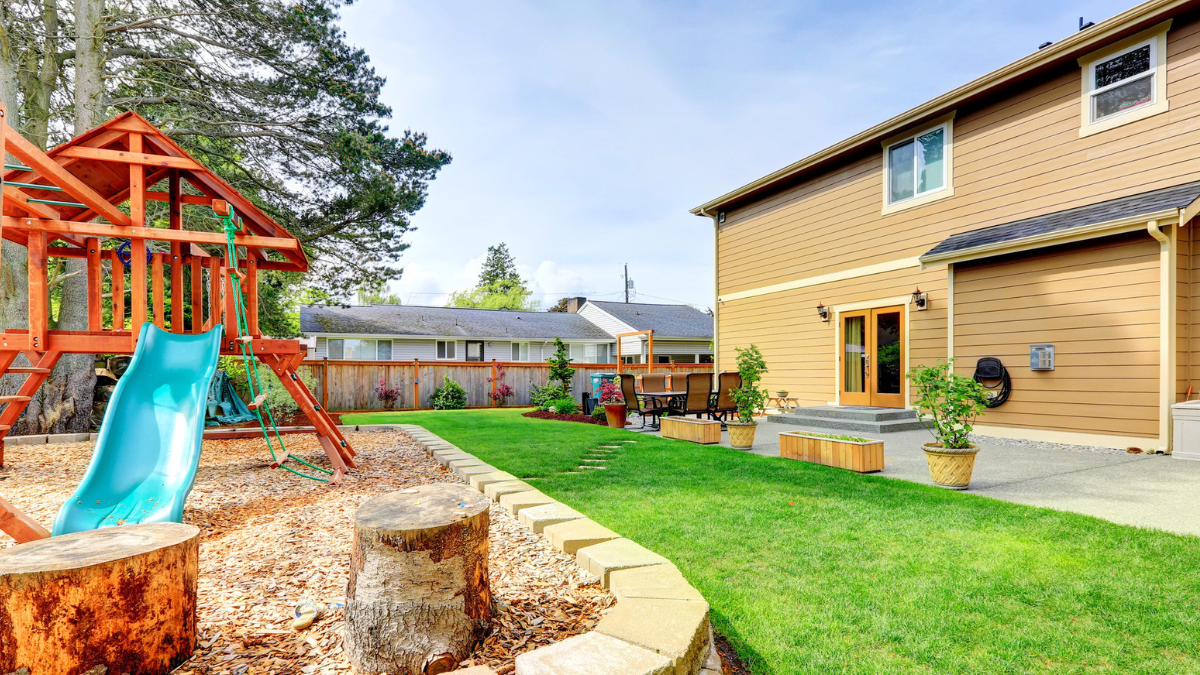
Residential playsets rely on light-duty hardware lacking a defined perimeter. A commercially specified play structure is built for repeated use by multiple family groups simultaneously, featuring heavy-duty materials and anchored foundations. Without containment, a play area dissolves into adjacent lawns, parking edges, and maintenance corridors within a single busy weekend.
Defined borders establish exactly where play happens and prevent mulch from spilling onto pathways. Containment materials must hold up under heavy foot traffic rather than just occasional weekend use.
For shared-use durability, WillyGoat playground borders for shared play areas offer purpose-built perimeter solutions engineered for multi-family environments, drastically outperforming generic landscaping timber that degrades quickly.
| Key Insight: Commercial play structures and defined borders reduce liability and isolate wear before the first guest arrives. A residential playset cannot survive multi-family use, so containment is the real operational standard. |
2. Provide One Screen for Check-Ins and Requests
A tablet resting on a lobby counter on a charging cable poses a theft risk and signals poor property management. Families will ask staff directly when the device lacks power, adding management load during peak arrival times. The operational fix involves replacing loose devices with fixed enclosures that remain tamper-resistant and powered all day.
VESA wall mounts recess into a lobby wall with concealed wiring, while floor-stand kiosk units position directly at a check-in counter. For wired-power reliability, secure leasing-office tablet stands from VidaBox deliver PoE-powered enclosures that stay charged without staff intervention.
A properly deployed station handles digital check-in processes, local area guide access, and maintenance request submissions automatically. This self-service workflow allows guests to acknowledge community rules or sign liability waivers without requiring a staff member present.
3. Give Families a Place to Land
A shaded gathering space operates as a traffic management tool rather than a simple landscaping amenity. Without a defined outdoor node, families spread across the property into maintenance corridors and reserved parking perimeters. This dispersal creates neighbor friction that surfaces in reviews as complaints about crowding and noise.
A functional gathering hub requires a commercial canopy, weather-resistant seating, and a durable surface like decomposed granite or poured rubber instead of bare lawn. Position this hub directly adjacent to the play zone so the two spaces function as an integrated outdoor system rather than disconnected amenities.
4. Manage Deliveries to Prevent Lost Packages
Families on longer stays order daily supplies, grocery deliveries, and replacement gear on a regular schedule. When parcel handling goes unmanaged, the result is doorstep theft risk and hallway clutter. Implementing a tiered package management protocol based on building size eliminates this operational bottleneck.
At the low-cost end, a labeled shelf with a unit sign-out log resolves most missing package reports without capital investment. Mid-range properties deploy dedicated parcel lockers with unit-specific compartments, while full-service operations rely on staffed reception windows. Since process precedes hardware, even a clearly posted pickup protocol reduces guest friction immediately by establishing expectations.
5. Install Clear Wayfinding Signage
Families navigating a property with young children and loaded strollers do not tolerate ambiguous wayfinding. Every question directed to management represents a measurable failure of signage design, adding call volume during busy arrival hours. Guest navigation research indicates that clear directional signage remains a top-priority facility feature for large properties.
Required sign locations include parking entries, main entrances, amenity zones, mail areas, trash points, and emergency exits. Weatherproof, UV-stable signage holds up year-round, while printed paper in plastic sleeves fades quickly. Consistent language across all signs keeps guests out of maintenance zones without requiring staff intervention.
6. Provide Storage for Bulky Family Gear
Strollers, folding wagons, oversized bicycles, and heavy beach carts routinely cause hallway bottlenecks when properties lack designated gear storage. These items end up blocking stairwells or parking spaces, which triggers property damage reports. A covered, ground-level storage area positioned near the main entrance keeps pathways clear.
Functional gear storage requires horizontal hooks for bicycles alongside dedicated stroller bays. These bays need enough width to accommodate double-wide models, which typically measure 30 to 32 inches across. Clear painted markings on the floor indicate exactly which items belong in which zone, keeping egress corridors completely clear of trip hazards.
7. Audit Lighting for Nighttime Navigation
A 30-minute property walk at dusk along the exact guest arrival route reveals dark path segments, unlit parcel areas, and shadowed entry points. Managers should map every coverage gap and assign a priority tier before ordering new fixtures. Priority zones start with the path between parking and the main entrance, followed by shared entry points and the mail area.
The play zone perimeter also demands strong illumination since families frequently stay outside into the early evening. Motion-activated fixtures serve as an effective cost-management tool for parking areas, delivering reliable safety coverage late at night without inflating the monthly utility bill.
8. Document Scheduled Property Inspections
A play border that shifts out of alignment, an unlit pathway, or a tablet enclosure with a cracked panel quickly generates guest complaints. Scheduled staff inspections prevent small hardware failures from impacting the overall guest experience. Structure the inspection checklist by amenity zone with a defined weekly or monthly cadence.
High-use zones like play areas require weekly checks, while signage and gear storage need monthly reviews. Incorporating a QR code at the tablet station links guests directly to a maintenance form, creating a streamlined reporting channel. Managers can review this submitted feedback monthly and adjust hardware before minor issues escalate.
The Path Forward for Property Upgrades
Select one property in the portfolio and implement these upgrades systematically to measure their true impact. Starting with a secure tablet station and commercial playground containment allows managers to track immediate changes in check-in friction, liability exposure, and outdoor maintenance calls. Integrating parcel management, robust signage, and gear storage removes the logistical bottlenecks that frustrate family travelers.
About the Author

Ryan Nelson
I’m an investor, real estate developer, and property manager with hands-on experience in all types of real estate from single family homes up to hundreds of thousands of square feet of commercial real estate. RentalRealEstate is my mission to create the ultimate real estate investor platform for expert resources, reviews and tools. Learn more about my story.